Tree Service Experts in Vegas
Seeking reliable Las Vegas tree removal services? Opt for an ISA‑certified team that recognizes Mojave stresses—severe heat, alkaline soils, fierce winds—and evaluates decay, root stability, and lean using ANSI A300/Z133 practices. Anticipate engineered rigging or crane picks near pools and utilities, utility coordination, and GPS‑tracked emergency response. Demand Nevada licensing, permits, and copyright‑issued insurance naming you additional insured. Require itemized bids, fixed scope, and documented safety plans. You'll learn how to safeguard property, mitigate risk, and verify competence moving forward.
Essential Highlights
The Reason Why Area Expertise Makes a Difference in the Mojave Climate
Due to the Mojave's intense heat, minimal humidity, alkaline soil conditions, and abrupt wind events that strain trees in distinctive ways, you need a removal team that understands indigenous plant characteristics and territorial risks. You're dealing with surface-level, dried-out root systems, fragile timber, and rapid weight changes during wind bursts. Area-specific experience enables workers to forecast failure modes in palm, mesquite, or pine, consider Drought adaptation traits, and select cut sequences that control fiber tear-out. Technicians plan rigging angles to offset wind tunnels between structures, prepare impact sites on calcified soil, and track bark layer heat levels to avoid sun damage when canopy reduction reveals trunk surfaces. They assess saline deposits, water distribution methods, and rot patterns unique to dry-climate vegetation. That knowledge reduces collateral damage, downtime, and risk during removals.
Licensed Arborists and Safety-Priority Operations
While any crew can cut a tree down, qualified arborists execute removals through verifiable standards, calibrated equipment, and validated safety measures. You should expect certified arborist credentials, formal risk evaluations, and complete tie-in system reviews. Specialists implement certified rigging systems, braking systems, and drop-zone controls to protect structures, utilities, and soil.
Arborists choose climbing techniques—single-rope and doubled-rope systems—determined by tree canopy structure, anchor strength, and lateral movement potential. They confirm load rating specifications, keep three-point positioning, and apply proper chainsaw techniques that prevent kickback and binding. Cut sequencing follows ANSI A300 and Z133 standards: pre-tension, managed descent, and tag-line management to eliminate dynamic shock.
You'll get equipment logs, PPE compliance, and site cleanup plans. The end result is consistent results, reduced liability, and documented safety performance.
Emergency Tree Removal and Storm Response
When severe weather strikes, you need quick 24/7 dispatch that establishes ETA, secures the site, and prioritizes life-safety and utility conflicts. We utilize hazard assessment protocols—ISA and ANSI-compliant—to evaluate root plate failure, lean angle, load paths, conductor clearance, and structural defects before any cut. You'll also get debris cleanup coordination with traffic control, chipper staging, and disposal sequencing to restore access while meeting municipal and landfill requirements.
Rapid 24-Hour Dispatch
Storm conditions topple trees swiftly, so we respond more quickly—our round-the-clock dispatch sends certified crews and specialized equipment to your property within minutes. You get a real-time coordinator, GPS-tracked mobile crews, and time-stamped ETAs. Our night dispatch runs continuously, prioritizing blocked roads, utility conflicts, and property access based on severity and proximity.
We strategically position cranes, loaders, and insulated tools throughout Las Vegas to minimize travel time. Teams get digital work orders with site details, species data, and power-line proximity flags, minimizing on-site downtime. Communication is redundant—including cell, radio, and satellite—to ensure continuity during grid outages. You get status updates at each stage: en route, on scene, and clear. This quick, evidence-based deployment model reduces incident duration, safeguards infrastructure, and restores access efficiently and safely.
Safety Assessment Protocols
Prior to any cutting, our ISA-certified arborists execute a systematic hazard assessment that prioritizes life safety, utilities, and structural integrity. You obtain a quick site walk, flagged exclusion zones, and lockout-tagout near energized lines. We verify root stability using probe tests, buttress inspection, and ground heave indicators. We evaluate soil compaction with a penetrometer to determine anchorage loss under wind load. Canopy decay is mapped with sounding, resistance drilling, and visual indicators of fungal activity. A lean assessment includes plumb-line deviation, copyright fiber condition, and load path toward targets.
We compute failure likelihood through ISO 31000-style risk matrices and ANSI A300 standards. You obtain a removal plan defining tie-in points, rigging loads, drop zones, and secondary egress. When thresholds exceed tolerance, we transition to crane-assisted removal.
Debris Clearance Coordination
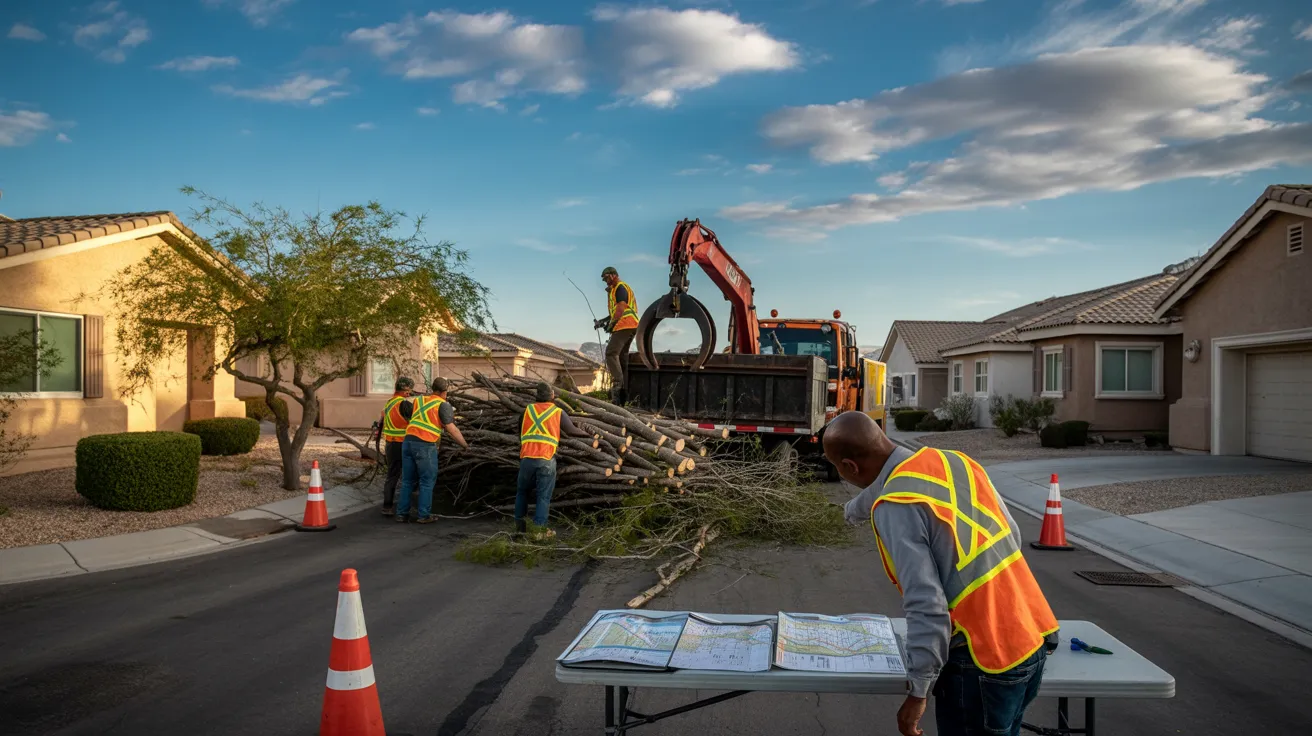
Following a blowdown, our personnel implements an incident-command approach to debris cleanup that keeps you safe and restores access rapidly. We create a unified command, establish safety zones, and sequence work by critical path: life-safety, utility clearance, ingress/egress, then cosmetic removal.
We provide chain-of-custody tagging for every extraction, with load tickets detailing storm haulout volumes and destinations. We utilize mixed equipment—grapples, skid-steers with turf mats, chippers with knife calibration—to minimize secondary damage and accelerate throughput. Spotters enforce exclusion distances while certified traffic control safeguards road interfaces.
We coordinate with utility companies and public works departments for harmonized cut-and-push, and we direct neighborhood coordination to combine staging, minimize truck trips, and clear get more info arterials first. Following operations, we verify sweep quality, document outcomes, and supply disposal compliance records.
Professional Removal Services Close to Pools, Walls, and Power Lines
When working near pools, walls, or power lines, you must have engineered rigging plans and, when necessary, certified crane picks to direct load paths and eliminate impact or splash hazards. You coordinate with the utility to meet clearance requirements, use insulated tools where specified, and follow ANSI Z133 and OSHA 1910/1926 protocols. You confirm each step with initial hazard assessments, documented load calculations, and spotter communication to keep tolerances tight and risk minimal.
Rigging & Crane Methods
Utilize engineered rigging and, when needed, hydraulic cranes to dismantle trees safely beside pools, walls, and energized lines. You start by calculating load paths, fiber direction, and expected piece weights using diameter, length, and species density. With high angle rigging, you set primary and redirect anchors to control swing and reduce lateral force on targets. You select ropes by MBS and sheath durability, match friction devices to expected heat, and use rated slings and hardware with documented inspection cycles.
When structural canopy constraints or access restrictions impede traditional lowering techniques, you employ crane assisted lifts. You determine pick points, calculate sling angles, and ensure line-of-sight communication. A qualified operator executes zero-swing picks while you maintain tag-line control, oversee landing zones, and validate each cut's stability before release.
Adherence to Utility Clearance Standards
Beyond appearance, utility clearance compliance determines how you clear trees near pools, masonry, and energized conductors. You evaluate conductor voltage class, span sag, and wind sway to calculate safe approach distances, then organize cuts that preserve clearance standards throughout the procedure. Within a utility easement, you verify rights-of-access, pinpoint underground service laterals, and indicate setbacks to avoid encroachment on buried lines, pool plumbing, and rebar-tied walls.
You set up insulated tools, dielectric ropes, and non-conductive poles, and you ground equipment as needed. Spotters track conductor proximity while you execute controlled, small-piece dismantles with taglines to prevent swing into walls or water. You liaise with the utility for de-energization or cover placement when limits of approach cannot be achieved, documenting compliance and as-built clearances.
Permits, Liability Coverage, and Insurance
While it's tempting to move fast once a hazardous tree is discovered, you must verify permits, insurance, and liability coverage before any work starts. In Clark County and Las Vegas, permit requirements differ by tree species, diameter, and proximity to rights-of-way. Confirm whether your property falls under city or county jurisdiction and obtain written authorization when needed. Ask the contractor for a current Nevada contractor's license, a certificate of insurance naming you as additional insured, and written limits for general liability and workers' compensation.
Verify policy dates, exclusions, and employer liability limits; don't accept "proof upon request"—require copyright-issued certificates. Insist on a detailed scope of work, risk controls, and hold-harmless/indemnification language. Log neighbor notifications and property line agreements to avert boundary disputes and third-party claims.
Cleanup, Stump Grinding Services, and Site Restoration
When felling and rigging operations conclude, guide the crew through a controlled clean-up that avoids secondary hazards and property damage. Stage barricades, confirm drop zones are clear, and use blowers, rakes, and magnets to eliminate metal fasteners, chips, and twigs. Transport debris with minimal-lift techniques to minimize dust and protect hard surfaces.
Begin stump grinding. Flag utilities, set guards, and grind to a depth that corresponds to replanting or hardscape plans, typically 6–12 inches, going deeper for root excavation near invasives or heaving slabs. Collect grindings or repurpose per your soil plan to prevent nitrogen tie-up.
Reinstate the site in a systematic manner: apply screened topsoil as backfill, compact in incremental lifts, grade for water drainage, and set up erosion control systems. Execute soil amelioration procedures—test pH, add compost, gypsum, or wetting agents—followed by irrigation and stability verification.
How to Choose a Trustworthy Las Vegas Tree Service Company
As you evaluate a Las Vegas tree service, concentrate on verifiable credentials, safety systems, and validated qualifications. Verify Nevada business license, city permit, and insurance (general liability and workers' compensation). Request accredited credentials of arborists (ISA Certified Arborist credentials, TCIA membership). Request written scope specifying methods, and risk controls: ANSI A300 pruning, ANSI Z133 safety, equipment requirements, and management of traffic and pedestrians.
Examine estimator proficiency: hazard assessment, decay identification, utility clearance processes, and desert species understanding (palm, palo verde, mesquite). Insist on a site-specific safety plan and documented preliminary briefings. Compare itemized, fixed-price bids with exclusions and cleanup requirements.
Check credentials through time-stamped customer testimonials, current references, and photo-documented projects. Avoid door-to-door operators and cash-only quotes. Insist on permits for right-of-way work and a detailed schedule and warranty.
Common Questions
What Are Expected Price Ranges for Common Tree Removals in Las Vegas?
Plan for typical Las Vegas tree removal to run $200–$600 for small trees, $600–$1,200 for medium, and $1,200–$3,500+ for large or hazardous removals. You'll pay $250–$600 for small palms and $800–$2,500+ for mature palms, based on height, trunk diameter, overhead utilities, and crane needs. Request ISA-certified assessments, proof of insurance, and written project scope. Ask about stump grinding ($100–$400+), traffic control, and debris removal. Stay away from low bids without safety plans or permits.
Are Eco-Friendly Disposal or Wood Recycling Options Available?
Yes—we offer eco-friendly disposal and wood recycling. Think of a felled tree like a retired bridge: you don't discard it; you repurpose its steel. We shred clean wood for mulch programs, kiln-dry salvageable logs, and donate habitat enhancement materials (brush/logs) for pollinators and urban wildlife. We separate invasive species, prevent contaminated loads, and follow chain-of-custody protocols. You'll receive documentation on volumes kept out of landfill and compliance with local air and waste regulations.
Can You Arrange Work Around HOA Regulations and Quiet Hours?
Absolutely. You supply schedules that adhere to HOA guidelines and quiet hours. You file notices, coordinate gate access, and handle permit navigation when mandated. You schedule low-decibel phases first, implement noise mitigation (electric saws, baffled chippers, staged idling), and limit high-impact cuts to approved periods. You document compliance, carry insurance, and maintain traffic and drop-zone control. You also adapt to wind advisories and wildlife nesting seasons to meet safety and regulatory protocols.
How Long Does a Standard Removal Appointment Take?
Most standard removals take 2–4 hours. Quick, secure, methodical—team arrival, safety briefing, equipment setup, precision cuts, controlled lowering, stump grinding when requested, followed by site cleanup. Duration varies by tree height, canopy density, proximity to structures, utilities, and access width. We implement ANSI Z133 protocols, PPE, and spotters to control drop zones and noise. Weather patterns, permit inspections, and staging can extend the timeline. We'll provide a start window and real-time updates.
What Are the Available Payment Methods and Financing Options?
We accept payment through major credit cards, debit, checks, or ACH. We also provide financing and structured payment plans upon credit review. For deposits, we accept secure online invoicing. Final payment's due upon job completion, after you check debris removal, stump handling, and scope. For larger removals, 0% promo terms may apply. We secure transactions, itemize equipment and labor fees, and provide written estimates, so you can compare your options and manage budget safely and transparently.
Closing Remarks
You understand the concept: the safest, budget-friendly tree removals originate from local, certified arborists using proven techniques. In the Mojave climate of Las Vegas, that stays valid. You confirm credentials, validate insurance, and require ANSI Z133 compliance. You demand controlled rigging near utilities, documented permits, prompt storm response, and comprehensive site restoration, including stump grinding. You choose data over guesses, project controls over shortcuts, and transparent pricing over vague promises—because in dangerous jobs, proof surpasses assumptions every time.